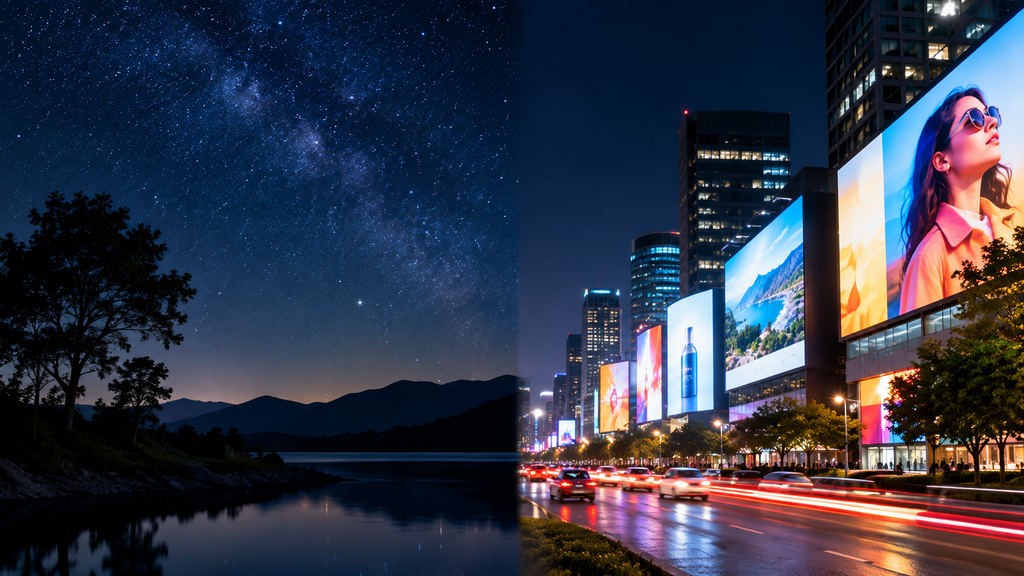
The growing conversation around the Dark Sky Movement has brought new attention through Social Media cities use artificial light after sunset. The movement promotes responsible Digital Advertising lighting that reduces unnecessary brightness, glare, and light pollution while protecting night-time environments. At the same time Video Websites have become important part of modern outdoor advertising, offering dynamic and highly visible communication in busy urban locations.
Digital Advertising rely on illuminated displays to attract attention and deliver changing creative content throughout the day and night. Their brightness, movement, and flexibility can make them effective advertising platforms in Search Engines. However, their presence also raises questions about nighttime visual comfort, energy consumption, and the character of surrounding environments.
The discussion does not necessarily mean choosing between Digital Advertising and darker skies. Instead, it highlights the importance of responsible design and regulation. Digital billboard operators can consider brightness controls, automatic dimming, appropriate operating hours, and display settings that respond to ambient lighting conditions. Careful placement can also help reduce unwanted illumination near residential areas, observatories, wildlife habitats, and other light-sensitive locations.
Firms considerations are becoming part of responsible media planning. Creative campaigns can remain visually engaging while using thoughtful brightness levels and environmentally conscious practices. For cities, clear standards can help balance commercial communication with nighttime environmental objectives.
As Firms continues to evolve, the relationship between the Dark Sky Movement and digital billboards demonstrates the need for smarter urban advertising. Strategic planning, technology, and responsible lighting practices can help create outdoor campaigns.